The Heritage of India A.L.Basham Part 1
The Heritage of India A.L.Basham Part 1
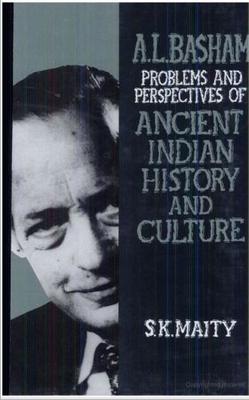 |
| A.L.Basham |
1 A.L.Basham -The Heritage of India. (Property that is or may be inherited; an inheritance)
Introduction A. L. Basham (Athur/Lewellyn/Basham)
Arthur Llewellyn Basham (24 May 1914 – 27 January 1986) was a noted historian, Indologist and author of a number of books. As a Professor at the School of Oriental and African Studies, London in the 1950s and the 1960s, he taught a number of famous Indian historians, including Professors R.S. Sharma, Romila Thapar A. K. Narain and V. S. Pathak.
Born 24 May 1914 Loughton, Essex, England
Died 27 January 1986 (aged 71) Calcutta, India
Nationality British
Education School of Oriental and African Studies
Occupation Historian and Educationalist
Known for noted historian and Indologist
The Heritage of India Theme
Social Interdependence. One of the great themes pervading Indian life is social interdependence. People are born into groups--families, clans, sub-castes, castes, and religious communities--and live with a constant sense of being part of an inseparable from these groups.
The Heritage of India Explanation
Additional English
Indian Heritage Introduction
Heritage means what we inherit from our ancestors and from our past. India is a land of varied cultures and traditions. People from numerous castes, religions, and creeds reside in our country. Each ethnic group in our country has its own tale of origin and its set of unique traditions and culture. They have all contributed to the making of Indian history and culture. Nature has made India into a distinct geographical entity.
Indian Heritage: A Gift from the Older Generations
Indian heritage and culture are vast and vivid because of the large number of religious groups residing in our country. Every community has its own set of customs and traditions which it passes on to its younger generation.
However, some of our customs and traditions remain the same throughout India our traditions teach us to inculcate good habits and make us a good human being. Our cultural heritage is thus a beautiful gift from our older generation that will help us become a better human being and build a harmonious society.
Respect for our Indian Heritage
The elders should take responsibility to invoke love for the Indian heritage in the younger generations. This must be done from the very beginning only then we can preserve our rich heritage. It is the duty of the elders to invoke love for the Indian heritage in the younger generations.
This must be done from the very beginning only then we can preserve our rich heritage. Schools must teach students about Indian heritage and how it has survived for centuries. They must also share the importance of preserving it.
This would help in invoking a feeling of pride in them and they would be inspired to continue the tradition and also pass it on to the new generation. This needs a collective effort by the teachers as well as parents.
Mahatma Gandhi was looked on by many, both Indian and European, as the epitome of Hindu tradition, but this is a false judgment for he was much influenced by Western ideas. Gandhi believed in the fundamentals of his ancient culture, but his passionate love of the underdog and his antipathy to caste though not unprecedented in ancient India, were unorthodox in the extreme, and owed more to European 19th century liberalism than to anything Indian. His faith in non-violence was, as we have seen, by no means typical of Hinduism- his predecessor in revolt, the able Maratha Brahman B.G. Tilak, and Gandhi's impatient lieutenant Subhash Chandra Bose, were far more orthodox in this respect. For Gandhi's pacifism we must look to the 'Sermon on the Mount' and to Tolstoy. His championing of women's right is also the result of Western influence.
Today, there are few Indians, whatever their creed, who does not look back with pride on their ancient culture, and there are few intelligent Indians who are not willing to sacrifice some of its effete elements so that India may develop and progress. Politically and economically India faces many problems of great difficulty, and no one can forecast her future with any Certainty.
But it is safe to predict that, whatever the future may be, the Indians of coming generations will not be unconvincing and self-conscious copies of Europeans, but will be men rooted in their traditions, and aware of the continuity of their culture. Already, after only seven years of Independence, the extremes of national self-denigration and fanatical cultural chauvinism are disappearing. We believe that Hindu civilization is in the act of performing its most spectacular feat of synthesis.
Hindu civilization will, we believe, retain its continuity. The Bhagwad Gata will not cease to inspire men of action, and the Upanishads, men of thought.
Our Literature
Indian literature is as rich as its culture. We have various books written on many topics since ancient times. We have the Vedic literature, epic Sanskrit literature, Classic Sanskrit literature and Pali literature among other kinds of Indian literature. Many of our books are being translated to other languages to provide access to a greater number of readers so that more and people can benefit from the knowledge. Such a wonderful and rich literature must be preserved at any cost.
Indian culture is the heritage of social norms, ethical values, traditional customs, belief systems, political systems, artifacts and technologies that originated in or are associated with the Indian subcontinent. The term also applies beyond India to countries and cultures whose histories are strongly connected to India by immigration, colonization, or influence, particularly in South Asia and Southeast Asia. India's languages, religions, dance, music, architecture, food and customs differ from place to place within the country.
Indian culture, often labelled as a combination of several cultures, has been influenced by a history that is several millennia old, beginning with the Indus Valley Civilization. Many elements of Indian culture, such as Indian religions, mathematics, philosophy, cuisine, languages, dance, music and movies have had a profound impact across the Indosphere, Greater India and the world.
Indian-origin religions Hinduism, Jainism, Buddhism, and Sikhism, are all based on the concepts of dharma and karma. Ahimsa, the philosophy of nonviolence, is an important aspect of native Indian faiths whose most well known proponent was Mahatma Gandhi, who used civil disobedience to unite India during the Indian independence movement – this philosophy further inspired Martin Luther King Jr. during the American civil rights movement.
Foreign-origin religion, including Abrahamic religions, such as Judaism, Christianity and Islam, are also present in India, as well as Zoroastrianism and Baháʼí Faith both escaping persecution by Islam have also found shelter in India over the centuries.
India has 28 states and 8 union territories (A union territory is a small administrative unit that is ruled by the union.
The union territories are administered and controlled directly by the Central Government of India.) with different culture and it is the second most populated country in the world.
Indian philosophy refers to philosophical traditions of the Indian subcontinent. A traditional classification divides āstika (orthodox) and nāstika (heterodox) schools of philosophy, depending on one of three alternate criteria: whether it believes the Vedas as a valid source of knowledge;
Earliest Hindu philosophy were arranged and codified by Hindu Vedic sages, such as Yajnavalkya (c. 8th century BCE), who is considered one of the earliest philosophers in recorded history, after Aruni (c. 8th century BCE).
Jain philosophy were propagated by 24 Tirthankaras, notably Parshvanatha
(c. 872 – c. 772 BCE) and Mahavira (c. 549–477 BCE).
Buddhist philosophy was founded by Gautama Buddha (c. 563–483 BCE).
Comments
Post a Comment